
Dark Gums? What Gum Depigmentation Can (and Can't) Do
By Dr. Pia Lieb
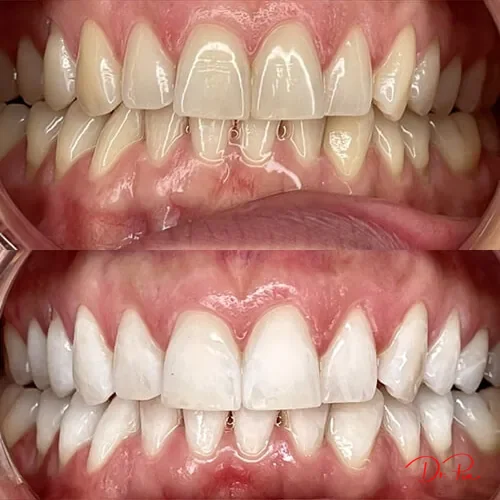
When people think about smile aesthetics, they focus on teeth, but the gums frame every smile, and their color matters too. Some people have naturally dark or patchy gums and wonder whether anything can be done. The answer is yes, through a treatment called gum depigmentation.
First, an Important Reassurance
Dark gums are usually completely normal and harmless.
The most common cause is simply more melanin, the same pigment that determines skin color, in the gum tissue. It's natural and varies among individuals and ethnic backgrounds.
What Causes Dark Gums?
- Genetic melanin (most common, harmless)
- Certain medications
- Smoking ("smoker's melanosis")
- Less commonly, medical conditions
Because a few causes are medical, a dentist should evaluate dark gums first. Most of the time it is benign, but it is worth confirming.
What Is Gum Depigmentation?
Gum depigmentation (also called gum bleaching or gum lightening) cosmetically reduces dark pigmentation to reveal a pinker tone.
How does laser gum depigmentation work?
Laser gum depigmentation uses a dental laser to gently remove the thin, pigment-containing outer layer of gum tissue, allowing lighter, pinker tissue to grow back as it heals over a couple of weeks.
The dental laser works to:
- Gently remove the thin, pigment-containing outer layer of gum tissue
- Allow lighter, pinker tissue to grow back as it heals over a couple of weeks
Lasers have become favored over older surgical or chemical methods because they offer:
- Greater precision
- Minimal discomfort
- Quicker healing
What can you expect from gum depigmentation?
Gum depigmentation is done under local anesthetic and is relatively quick, with mild soreness afterward and rarely significant pain. Results become visible as the gums heal over 1 to 2 weeks.
- Done under local anesthetic
- Relatively quick procedure
- Mild soreness afterward (rarely significant pain)
- Results visible as the gums heal over 1 to 2 weeks
Honest Caveats
- Results can be long-lasting, though pigmentation may gradually return over time, especially if smoking continues
- It's an elective cosmetic dentistry procedure, so it's rarely covered by insurance
- Gum tissue is delicate, so only do this with a qualified dental professional, never DIY products
When should you consider gum depigmentation?
Consider gum depigmentation when dark gums genuinely bother you or your smile feels less balanced because of gum color. If you're naturally dark and feel fine, it's entirely optional; active gum disease should be treated first.
Swipe to see more →
| Situation | Worth Discussing? |
|---|---|
| Dark gums genuinely bother you | Yes |
| Smile feels less balanced because of gum color | Yes |
| Naturally dark and feel fine about them | No (entirely optional) |
| Active gum disease | Treat that first |
A Note on Acceptance
There is nothing wrong or unhealthy about naturally dark gums. Many people are perfectly happy with their natural gum color. This is purely an aesthetic choice, never feel pressured.
Frequently Asked Questions
How long does gum depigmentation last? Results commonly hold for a long stretch, but this varies from person to person. Smoking and certain medications can cause pigmentation to return.
Is laser gum bleaching well established? It is a recognized procedure when performed by a trained dental professional, using a precise laser.
Does it hurt? The procedure is carried out under local anesthetic. Mild tenderness afterward is normal.
Can it be combined with gum contouring? Yes, both can be done together to address shape and color in one visit. If excess gum tissue is the bigger issue, see how contouring can help a gummy smile.
The Bottom Line
If dark gums genuinely bother you, laser gum depigmentation is a well-established cosmetic option in trained hands, but it is entirely optional, and a dental check first confirms the cause is the common, benign kind.
with Dr. Pia to discuss whether gum depigmentation is right for you.