Tooth Reshaping: How Enamel Contouring Works
By Dr. Pia Lieb
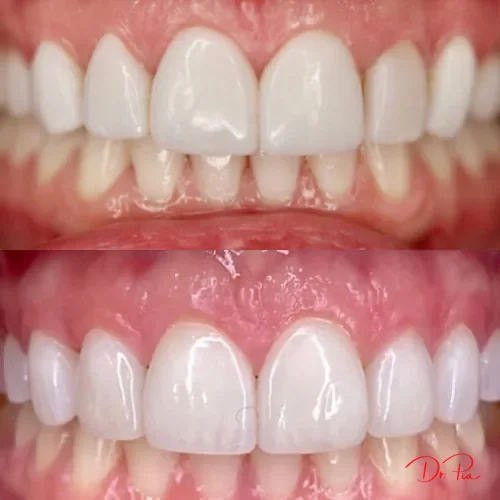
Tooth reshaping is a quick cosmetic procedure that gently removes tiny amounts of enamel to refine the shape, length, or surface of a tooth. Also called enamel contouring or recontouring, it is one of the most subtle upgrades in cosmetic dentistry, no needles, no downtime, and results you see the same day. Not every smile needs veneers, and reshaping is often the small tweak that makes the whole smile look balanced.
What is tooth reshaping?
Tooth reshaping is the removal of minuscule amounts of enamel, a fraction of a millimeter, to smooth edges, round points, and even out a tooth's proportions. Your dentist uses a fine instrument and polishing discs to sculpt the tooth, then polishes it smooth.
- Smooth a jagged or chipped edge
- Round a pointed canine
- Even out a tooth that sits slightly longer than its neighbors
- Soften a rough surface spot
Because enamel has no nerves, the adjustments need no anesthesia, and the difference in how balanced your smile looks can be surprisingly large for such small changes.
Who is a good candidate for tooth reshaping?
Tooth reshaping is ideal for people with minor imperfections, small chips, slightly uneven edges, overlapping points, or teeth that look a touch too long or pointed. Your enamel needs to be healthy and thick enough to spare a small amount.
- Small chips
- Slightly uneven edges
- Overlapping points
- Teeth that look a touch too long or pointed
Why is tooth reshaping so appealing?
Tooth reshaping needs no anesthesia, takes a single short visit, and shows its result the same day. For the right candidate, it is the lowest-commitment way to refine a smile.
- Only enamel is touched, and enamel has no nerves
- Single short visit, often 15 to 30 minutes
- Affordable compared with other cosmetic treatments
- Immediate results you can see the same day
What are the limits of tooth reshaping?
The main limit is that enamel does not grow back, so only small amounts can be removed safely. Reshaping refines what is already there, it cannot rebuild, lengthen, or transform a tooth. Teeth shortened by years of wear need their length restored instead, which is the focus of facelift dentistry.
- Can't fix significant problems like large chips or major misalignment
- Can't make teeth longer: only shorter
- Isn't appropriate for badly worn or fragile teeth
Over-aggressive contouring risks sensitivity or weakening a tooth, which is why this is a job for an experienced cosmetic dentist and never a DIY filing kit. Please don't file your own teeth. At our Park Avenue practice, Dr. Pia Lieb plans reshaping conservatively, often photographing and measuring first so every adjustment protects the tooth's strength.
How does tooth reshaping compare to other cosmetic options?
Reshaping suits minor edges and points, and veneers deliver major transformations. Matching the treatment to the problem keeps the fix proportional.
Swipe to see more →
| Procedure | Reversible? | Visit Time | Best For |
|---|---|---|---|
| Tooth reshaping | No (but minimal) | 15 to 30 min | Minor edges and points |
| Veneers | No | 2+ visits | Major transformations |
For a smile that needs more coverage than reshaping can give but where removing enamel is a dealbreaker, no-drill veneers offer broader change than contouring without the permanent step of shaving down a healthy tooth.
Frequently asked questions
Does tooth reshaping hurt?
No. Enamel has no nerves, so most patients feel only the slight vibration of the instrument, with no anesthesia needed.
Is tooth reshaping reversible?
No. The enamel removed does not grow back, though the change is so minor it is considered low-stakes and does not weaken a healthy tooth.
How long does tooth reshaping last?
Because nothing is added to the tooth, there is no added material that can chip or stain. The reshaped edge wears the way the rest of your enamel does.
Can reshaping fix crooked teeth?
Only very mild irregularities. Genuine crookedness needs clear aligners or braces to move the teeth into position.
Is tooth reshaping right for you?
If your teeth are basically good but a few edges bother you, tooth reshaping may be the small, affordable tweak that makes your whole smile look more polished. A short consultation confirms whether your enamel can spare the adjustment.
with Dr. Pia to find out if you're a candidate.
This article is for educational purposes only and is not a substitute for professional dental advice.