
White Spots on Your Teeth? Causes and How to Remove Them
By Dr. Pia Lieb
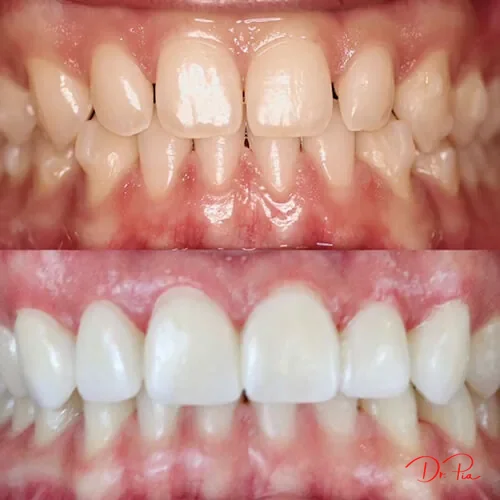
White spots on teeth are chalky, opaque patches where the enamel differs in mineral content and reflects light differently from the tooth around it. They are usually harmless, but they can be distracting, and once you know the cause, several treatments even out the surface.
What causes white spots on teeth?
White spots form when areas of enamel differ in mineral density, so they scatter light instead of transmitting it evenly. The four common causes are fluorosis, enamel hypoplasia, post-orthodontic demineralization, and early decay.
Dental fluorosis
Fluorosis comes from swallowing too much fluoride while the teeth were still forming in childhood. It usually shows as faint white flecks or fine lines and is purely cosmetic. Fluoride at normal levels remains one of the most effective cavity defenses, as the American Dental Association notes.
Enamel hypoplasia
Hypoplasia means the enamel did not form to full thickness during development, often because of childhood illness, nutritional gaps, or other developmental factors. The affected enamel is thinner and weaker, not just discolored.
Post-orthodontic demineralization
White spots appear after braces when plaque sits around the brackets and pulls minerals out of the enamel. Careful hygiene during treatment prevents most of these.
Early tooth decay
A "white spot lesion" can be the earliest visible stage of decay, before it becomes a cavity. Our guide to how cavities form and how to stop them explains this stage, which is exactly why a dentist should evaluate any new white spot first.
How do you remove white spots on teeth?
Because the causes differ, so do the fixes, ranging from microabrasion and resin infiltration to veneers. A cosmetic dentist recommends the most conservative option that works, escalating only when a spot is deep or stubborn.
Enamel microabrasion
Microabrasion gently removes a very thin surface layer to blend a spot into the surrounding enamel. It works best for shallow discoloration and preserves nearly all of the tooth.
Professional whitening
Professional whitening evens overall tone by lightening the surrounding tooth. It can make spots look more visible at first before the color balances, so it is often paired with another treatment.
Resin infiltration (Icon)
Resin infiltration is a newer, conservative option in which a low-viscosity tooth-colored resin seeps into the white lesion and restores even light transmission. It is particularly effective for fluorosis and post-braces spots, with no drilling.
Veneers
For deep or extensive cases, porcelain veneers cover the area entirely and reset both color and shape.
Which treatment is right for your white spots?
Match the treatment to the cause and depth. Mild, surface-level spots respond to conservative options; deeper or decay-related spots need more coverage or treatment of the underlying problem first.
Swipe to see more →
| Cause / depth | Best option |
|---|---|
| Mild fluorosis | Microabrasion or resin infiltration |
| Post-orthodontic spots | Resin infiltration |
| Hypoplasia (uneven enamel) | Resin infiltration or veneers |
| Deep or extensive spots | Veneers |
| Suspected early decay | Treat the decay first |
At Cosmetic Dentistry NYC, Dr. Pia Lieb favors the least invasive route first, in keeping with The Dr. Pia Method™, so healthy enamel stays intact whenever a conservative fix will do.
How can you prevent white spots?
Prevent white spots by controlling fluoride exposure in childhood and keeping enamel clean and strong during orthodontic treatment. Consistent hygiene and limiting dietary acid protect the mineral balance that keeps enamel clear.
For children and teens:
- Supervise fluoride toothpaste use so it isn't swallowed
- Keep hygiene excellent throughout orthodontic treatment
- Limit dietary acid and sugar exposure
For adults with braces or aligners:
- Floss daily around brackets and attachments
- Use a fluoride mouthwash
- Schedule frequent professional cleanings
Frequently asked questions
Are white spots a sign of decay?
They can be, especially if they're chalky, dull, and located along the gumline. A dentist should evaluate any new spot to rule out early decay.
Does whitening get rid of white spots?
Not directly. Whitening evens out the surrounding tooth, which can make spots less noticeable, but it does not remove them.
What is Icon resin infiltration?
A conservative treatment in which a low-viscosity resin penetrates the white lesion and restores light transmission, making the spot blend into the enamel.
Can white spots come back?
Yes, particularly if the underlying cause, acid exposure, fluoride imbalance, or poor hygiene, isn't addressed after treatment.
What should you do about white spots?
White spots are common, usually harmless, and treatable, often with conservative options like microabrasion or resin infiltration before anything more involved. Have a dentist identify the cause first, because the right treatment depends entirely on why the spot formed.
This article is for educational purposes only and is not a substitute for professional dental advice.