
At-Home vs. In-Office Clear Aligners: What's the Difference?
By Dr. Pia Lieb
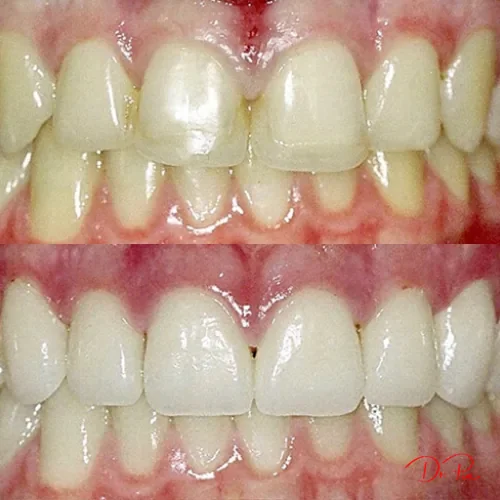
Clear aligners have made straightening teeth more discreet and convenient than ever, and if you're still weighing them against traditional metal brackets, our guide on whether braces or Invisalign is right for you is a good starting point. But a fork in the road trips a lot of people up: should you go with a mail-order at-home service or aligners managed by a dentist or orthodontist in person?
The difference matters more than the marketing suggests.
In-Office Aligners
In-office aligners (like Invisalign) involve a professional examining your mouth, taking X-rays and scans, and supervising your treatment throughout.
Strengths:
- Clinician can adjust the plan as your teeth respond
- Catches problems early (gum disease, root issues, bite changes)
- Handles bite and root movements that require expertise
- More appropriate for moderate to complex cases
- Better long-term outcomes for complex situations
Trade-offs:
- Higher cost
- Requires in-person appointments
At-Home (Mail-Order) Aligners
You take your own impressions or visit a scanning location once, then receive your full set of trays by mail with remote check-ins.
Strengths:
- Cheaper than in-office options
- Convenient: no recurring appointments
- Works for the mildest cases
Trade-offs:
- No in-person exam or X-rays: underlying issues like gum disease or roots that shouldn't be moved can go undetected
- No clinician watching in real time if something shifts wrong
- Limited to mild cases
Why does clinician supervision matter?
Supervision matters because, without an in-person exam, an aligner plan can miss problems that make tooth movement unsafe. The following risks are real:
- Aligning teeth on top of active gum disease (worsens it)
- Moving teeth with inadequate bone support (causes recession or loss)
- Missing bite issues that need addressing
- Triggering TMJ pain from incorrect movement
These aren't theoretical, they've shown up in real complaints against mail-order services.
At-Home vs. In-Office: Side-by-Side
Swipe to see more →
| Factor | At-Home | In-Office (Invisalign) |
|---|---|---|
| In-person exam | No | Yes |
| X-rays | No | Yes |
| Suitable case complexity | Mild only | Mild to complex |
| Real-time supervision | No | Yes |
| Risk of complications | Higher | Lower |
| Treatment time | Often shorter | Variable |
Which aligner option is right for you?
At-home aligners may work for truly mild cases when you've had a recent check-up and understand the risks. In-office is the safer bet for moderate or complex cases, any history of gum issues, or the best long-term outcome.
At-home may work if:
- Your case is truly mild
- You've had a recent dental check-up
- You understand the risks
- You're budget-driven
In-office is the safer bet if:
- Your case is moderate or complex
- You want clinician supervision
- You have any history of gum issues
- You want the best long-term outcome
A Smart Compromise: Dental Check Before Mail-Order
If you're tempted by mail-order convenience, at least get an in-person dental checkup first to confirm:
- No active decay
- Healthy gums
- Bone supports tooth movement
- No bite issues that need real orthodontics
Frequently Asked Questions
Are mail-order aligners safe? For mild cases with healthy teeth and gums, generally yes. The risk is in the cases they accept that they shouldn't.
How much cheaper are at-home aligners? Often less than half the cost of in-office.
Will my dentist work with my mail-order aligners? Most won't formally supervise them but may evaluate your dental health before you start.
What if something goes wrong with at-home aligners? You'd likely need to see a dentist or orthodontist in person, sometimes at higher cost to fix issues.
The Bottom Line
The convenience of mail-order is real, but straightening teeth is still a medical process. Knowing what you're trading away helps you make the call with eyes open.
with Dr. Pia to discuss the best aligner path for your case.