
Crooked Teeth: Should You Straighten Them or Cover Them?
By Dr. Pia Lieb
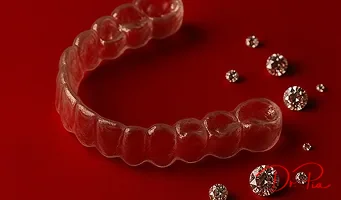
Crooked teeth can be straightened with orthodontics or covered with cosmetic dentistry, and the right choice depends on whether your teeth are otherwise healthy. Orthodontics physically moves teeth into place. Cosmetic dentistry reshapes or covers them to look straight without moving them. Both deliver an attractive smile, but choosing wrong can mean lasting regret.
How does orthodontics straighten crooked teeth?
Orthodontics moves teeth into their correct position, which fixes crowding, gaps, rotation, and bite problems at the root. Braces or clear aligners apply steady, gentle force over months to reposition each tooth without removing any tooth structure.
The advantages are hard to beat for healthy teeth:
- Fixes the real problem rather than hiding it
- Preserves all your healthy enamel: nothing is filed away
- Improves bite function, not just appearance
- Clear aligners are nearly invisible, which makes them adult-friendly (see braces vs. Invisalign to compare)
The trade-offs are time and commitment. Treatment runs months to a couple of years, and aligners work only if you wear them consistently.
How do veneers make crooked teeth look straight?
Veneers cover the front of teeth with thin porcelain shells that create an even, straight-looking smile in a couple of visits. Porcelain veneers are sometimes called "instant orthodontics" because a set can mask mild crookedness quickly.
The appeal is speed and versatility:
- Fast, weeks instead of years
- Correct color, shape, and wear at the same time as alignment
- A single solution for several cosmetic concerns at once
The cost is that the change cannot be undone. Traditional veneers usually alter healthy teeth for life, they do not correct the bite, and they carry a higher long-term maintenance commitment.
Should you cover crooked teeth or straighten them?
If your teeth are healthy and simply crooked, orthodontics is usually the better long-term choice because it is more conservative and fixes the actual problem. Most careful dentists follow one principle: do not do irreversible cosmetic work to solve something alignment could fix conservatively.
Orthodontics sacrifices no enamel, addresses the real issue, and clear aligners have made the process discreet for adults. Reserve veneers for cases where the teeth also have color, shape, or wear problems, not crookedness alone.
When do cosmetic cover-ups make sense?
Veneers make sense when crookedness comes with other cosmetic problems, or when you need results before a fixed deadline. Covering the teeth is the practical route in a few specific situations:
- You want fast results for a wedding or event
- Your teeth also need color, shape, or length correction beyond alignment
- You genuinely will not commit to months of orthodontic treatment
- The crookedness is mild and localized
Can you combine aligners and veneers?
Yes, many patients align the teeth first with clear aligners, then add minimal cosmetic touches. This middle path gives you real correction plus a polish while preserving natural tooth structure.
A common sequence looks like this:
- Straighten the teeth with clear aligners
- Brighten them with professional whitening
Because the teeth are already in the right position, any cosmetic work afterward is minimal and conservative.
Which option is right for your situation?
Match the treatment to the problem: alignment issues favor orthodontics, while combined cosmetic issues favor veneers. The quick guide below covers the most common scenarios.
Swipe to see more →
| Situation | Best Path |
|---|---|
| Healthy teeth, just crooked | Orthodontics |
| Crooked plus stained, chipped, or worn | Veneers, or aligners then veneers |
| Mild crookedness, fast event timeline | Veneers |
| Bite issues alongside crookedness | Orthodontics (essential) |
| Want the most conservative option | Aligners |
| Want the fastest dramatic change | Veneers |
Frequently Asked Questions
Are veneers faster than braces?
Yes, typically 2 to 4 weeks versus 6 to 24 months. But faster does not mean better for your tooth structure.
Can I do aligners first, then veneers?
Yes. Many cosmetic plans use this sequence and produce excellent, natural-looking results while preserving enamel.
Are veneers really irreversible?
Traditional veneers require removing a thin layer of enamel, which does not grow back. No-drill veneers are far more conservative.
Will my insurance cover Invisalign?
Sometimes partially, especially under orthodontic benefits. Check your specific plan.
The Bottom Line
If the issue is mainly alignment and your teeth are healthy, leaning toward orthodontics usually serves you better long-term. Save the irreversible cosmetic cover-ups for smiles that need more than straightening.
This article is for educational purposes only and is not a substitute for professional dental advice.