
Sensitive Teeth or Receding Gums? How to Tell the Difference
By Dr. Pia Lieb
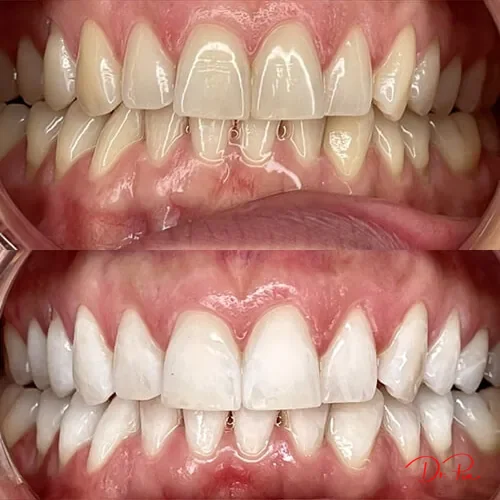
Gum recession is a structural change, the gum tissue physically pulling back, while tooth sensitivity is a symptom, the sharp zing you feel from hot or cold. They travel together so often that people confuse them, but they're not the same thing, and telling them apart helps you understand what your mouth is actually reporting.
What is gum recession versus tooth sensitivity?
Gum recession is visible tissue loss around a tooth; sensitivity is a nerve sensation triggered by temperature or sweetness. One you can usually see, the other you only feel.
Gum recession (structural change)
The gum tissue physically pulls back, exposing more of the tooth and eventually the root, sometimes addressed with gum recontouring and design. You can often see it:
- Teeth that look longer than before
- A visible notch or color change near the gumline
- Roots that feel rough to the tongue
Tooth sensitivity (symptom)
That sharp, brief zing when something hot, cold, sweet, or acidic hits a tooth. It's a symptom of an exposed or irritated nerve pathway, not a structural change in itself.
Why are gum recession and tooth sensitivity so often confused?
They're confused because recession is one of the most common causes of sensitivity: when gums retreat, they expose the nerve-rich root. The overlap is real, not coincidental.
The exposed root surface lacks the hard enamel that protects the crown. That root is full of tiny tubules leading straight to the nerve, so cold and sweet sensations suddenly trigger pain. In other words, recession frequently produces sensitivity, but sensitivity has other causes too.
What else causes sensitive teeth besides recession?
Sensitivity can arise from worn enamel, a cracked tooth, a failing filling, recent whitening, or a cavity. No recession required. You can have a sharp zing with perfectly normal-looking gums.
- Worn enamel from acidic foods or aggressive brushing, a common reason teeth turn suddenly sensitive
- A cracked tooth
- A worn or leaking filling
- Recent whitening, which is usually temporary
- A cavity
And the reverse holds too: you can have mild recession that isn't yet causing noticeable sensitivity. The two simply don't always move together.
How do you tell which one you have?
Look in the mirror and notice the pattern: visible root or longer teeth point to recession, while a zing on normal-looking teeth points to enamel wear or a specific problem. A quick self-check narrows it down.
Look in the mirror:
- If teeth appear longer or you see exposed root surfaces, recession is likely part of the picture
Notice the sensation:
- If teeth look normal but you get the zing, the cause may be enamel wear or something else entirely
Localize the pain:
- Pain concentrated on one specific tooth, especially when biting, often leans toward a crack or cavity that needs checking rather than general sensitivity
What's the quick decision guide?
Match what you see and feel to the most likely cause, then confirm it with a dentist.
Swipe to see more →
| What You See / Feel | Most Likely Cause |
|---|---|
| Teeth visibly longer + sensitivity | Recession |
| Notch at the gumline | Recession |
| Cold zing on multiple teeth, normal-looking gums | Worn enamel |
| Sharp pain on one tooth when biting | Cracked tooth |
| Sensitivity after whitening | Temporary |
| Sensitivity with visible decay | Cavity |
This guide points you in the right direction, but overlapping causes are common, which is why an exam settles it definitively.
Frequently Asked Questions
Can sensitivity exist without recession?
Yes, worn enamel, a cracked tooth, a leaking filling, whitening, or a cavity can all cause it.
Can recession exist without sensitivity?
Yes, particularly in its mild stages, before the root is significantly exposed.
Will fixing recession resolve sensitivity?
Often yes, when recession is the underlying cause. See gum recession options for how it's treated.
What's the fastest way to get a definitive answer?
A dental exam. A dentist can quickly identify whether recession, enamel wear, or a specific problem is driving your symptoms.
The Bottom Line
The practical move is the same either way: a dentist can quickly identify whether recession, enamel wear, or a specific problem is driving things, then target the fix. Understanding the difference helps you describe what you're experiencing accurately, and take it seriously rather than brushing it off. Persistent sensitivity or visible recession both deserve a professional look.
This article is for educational purposes only and is not a substitute for professional dental advice.