
Receding Gums: Why It Happens and Can You Reverse It?
By Dr. Pia Lieb
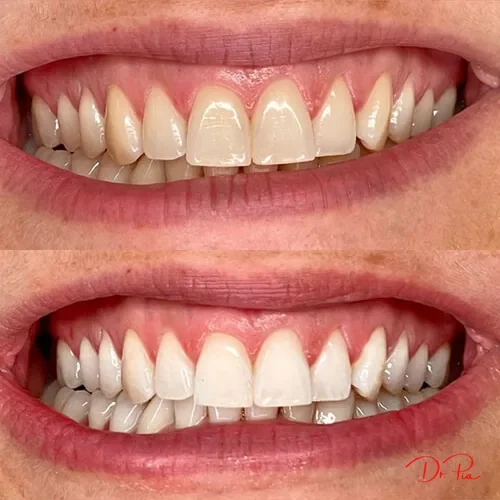
Gum recession is the gum tissue pulling back to expose more of the tooth and, eventually, the root, and while lost tissue doesn't grow back on its own, you can absolutely stop it from getting worse. If your teeth look longer than they used to or you feel a notch near the gumline, that's recession. It's common, usually gradual, and very manageable once you understand it.
What causes gum recession?
Gum recession is driven by physical trauma to the gums and by gum disease, often combined with genetic thin-tissue tendencies. The tissue retreats in response to pressure, infection, or a predisposition you were born with.
Common causes include:
- Aggressive brushing: too hard, with a stiff brush
- Gum disease: bacterial infection destroys tissue and supporting bone
- Genetics: thin gum tissue runs in families
- Teeth grinding: chronic clenching pressure pushes gums back
- Tobacco use, which starves gum tissue of blood flow
- A misaligned bite that overloads certain teeth
- Tongue or lip piercings that rub against the gums
Identifying which cause applies to you is the first step, because the fix depends entirely on the source.
Do receding gums grow back?
No, gum tissue does not regenerate on its own, so once it has receded, that tissue is gone. This is the single most important fact about recession, and it's why early action matters so much.
What you can do is decisive: you can stop recession from getting worse, and in serious cases a periodontist can surgically restore lost tissue with gum grafts or gum recontouring and design. The goal is to protect the gum you still have and, where needed, rebuild what's lost.
How do you stop gum recession from progressing?
Stopping recession means removing its cause: gentler brushing, treating gum disease, protecting against grinding, and quitting tobacco. Each step protects the remaining tissue.
Switch to a soft-bristled brush
Use a light touch and let the bristles do the work, not pressure. Hard scrubbing is a leading cause of mechanical recession.
Treat any gum disease
Professional cleanings plus improved home care halt the infection driving tissue loss. If your gums bleed, that's a warning sign, see our post on bleeding gums.
Get a night guard if you grind
A custom night guard absorbs the clenching forces that push gums back over time.
Quit tobacco
Restoring blood flow to the gums improves healing and slows further loss.
Address bite issues if present
Correcting a misaligned bite relieves the overload on individual teeth.
When should you consider a gum graft?
Consider a gum graft when recession exposes significant root, causes severe sensitivity, or threatens the tooth. A periodontist evaluates the extent and decides whether grafting is warranted.
Common reasons to graft:
- Recession exposes a large area of root surface
- Sensitivity is severe and persistent
- The exposed root creates cosmetic concerns
- The tooth is at risk of further damage or loss
Modern techniques such as the pinhole surgical technique are far less invasive than older grafting surgeries, with smaller openings and quicker recovery.
Why does gum recession matter beyond appearance?
Recession matters because exposed roots lack protective enamel, raising the risk of sensitivity, decay, and eventually bone loss. It's a functional problem, not just a cosmetic one.
- Exposed roots lack the hard enamel that shields the crown
- Sensitivity to hot, cold, and sweet increases
- Decay risk rises on the softer root surface
- Bone loss can follow when recession is advanced
- Tooth instability can result in severe cases
Because roots decay more easily than enamel-covered crowns, ongoing recession quietly compounds your long-term risk.
What are the stages of gum recession?
Recession progresses from a mild notch with no symptoms to advanced root exposure with possible tooth mobility; the earlier it's caught, the simpler the fix.
Swipe to see more →
| Stage | Signs | Action |
|---|---|---|
| Mild | Slight notch, no sensitivity | Adjust hygiene, monitor |
| Moderate | Visible root, mild sensitivity | Treat cause, professional cleaning |
| Advanced | Significant root exposure, sensitivity, possible mobility | Consider grafting |
Frequently Asked Questions
Can receding gums grow back naturally?
No. They can be surgically restored with grafting, but tissue does not regenerate on its own.
Is gum recession painful?
It's often more sensitive than painful, exposed roots react to temperature. If you're unsure which you're dealing with, see sensitive teeth or receding gums.
How fast does gum recession progress?
It varies, very slow with mild mechanical causes, but rapid when active gum disease is driving it.
Are gum grafts painful?
Modern techniques are much less invasive, and most patients report manageable discomfort during recovery.
The Bottom Line
If you spot recession, don't panic, but do act. A dentist can identify the cause, measure how far it has progressed, and tell you whether changing habits is enough or whether a graft is worth considering. Caught early, most recession can be halted before it becomes serious, and the tissue you protect today is tissue you keep.
This article is for educational purposes only and is not a substitute for professional dental advice.