
Nancy Edsparr
Treatment
Porcelain Implant Crowns in NYC
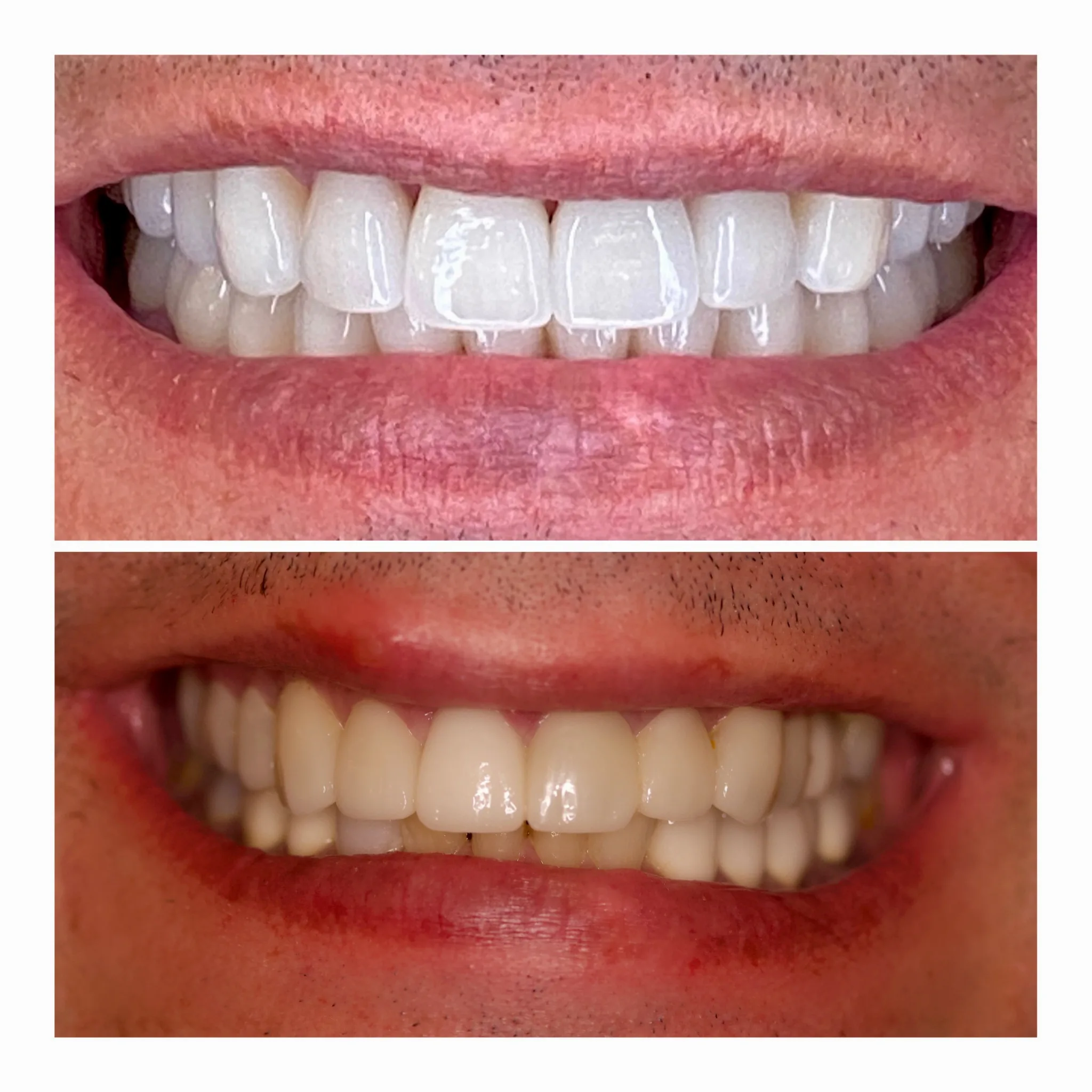
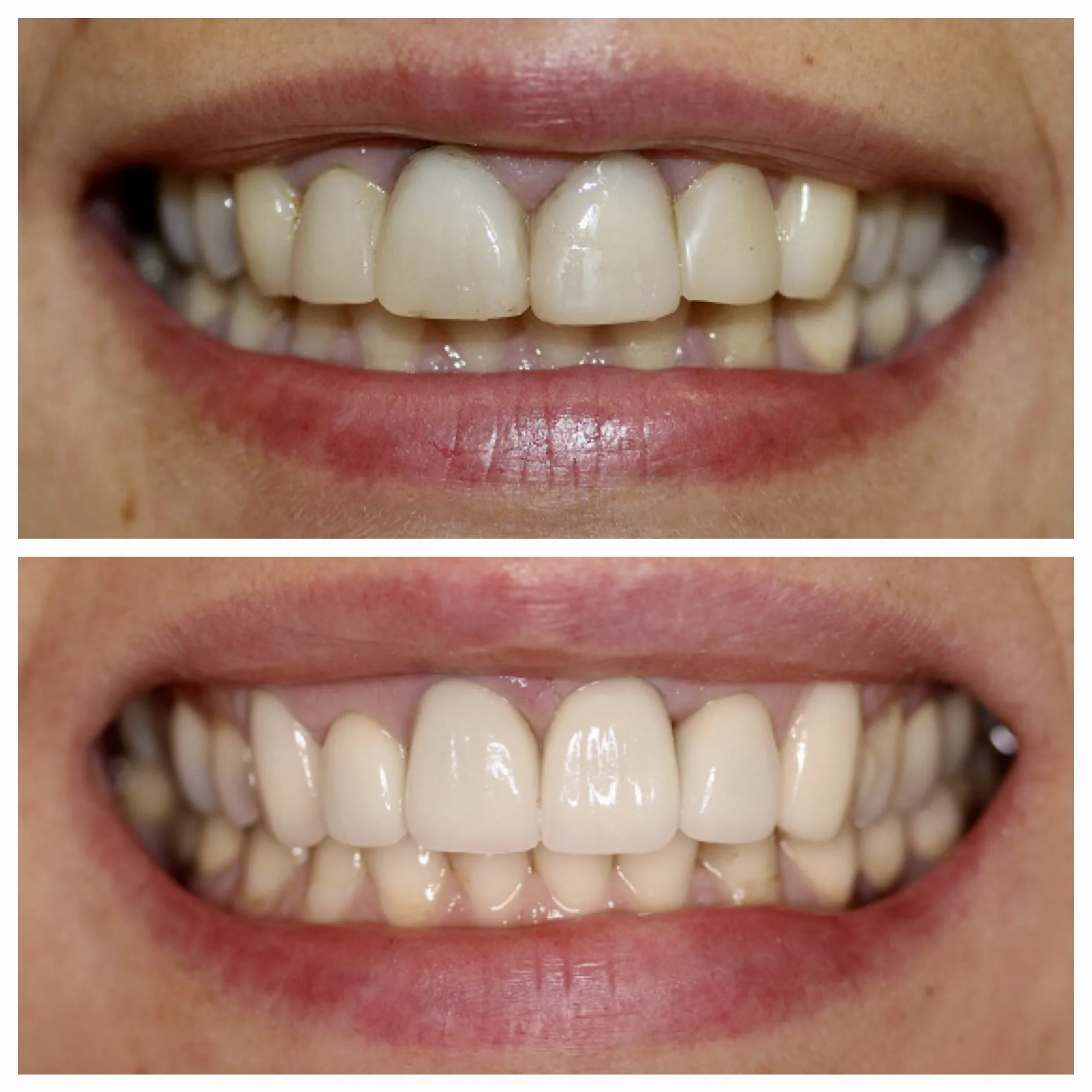
Porcelain crowns restore cracked, worn, or missing teeth with a full-coverage ceramic restoration that fits over a prepared tooth or onto a dental implant abutment. At Cosmetic Dentistry NYC, Dr. Pia Lieb, DDS, designs each crown at her Park Avenue South practice in Manhattan.
What is a porcelain crown?
A porcelain crown is a full-coverage ceramic restoration cemented over a prepared tooth or attached to a dental implant abutment. It rebuilds the tooth’s original shape, biting surface, and appearance above the gum line.
Porcelain transmits and reflects light the way natural enamel does, which is why it replaces metal and acrylic in visible areas. A crown covers the entire clinical crown of the tooth, unlike porcelain veneers, which cover only the front surface.
When do you need a porcelain crown?
A porcelain crown is indicated when a tooth has lost too much structure for a filling, an inlay, or a veneer to restore predictably. Crowns also restore single dental implants after a specialist places the implant.
Not every damaged tooth requires full coverage. Conservative dental inlays and onlays rebuild the biting surface while preserving healthy enamel, and Dr. Pia evaluates that option before recommending a crown.
- 1Cracked or fractured teeth. A tooth that requires full-cusp coverage.
- 2Failed large fillings. A filling that has left thin remaining walls.
- 3Root canal-treated teeth. A tooth left brittle after treatment.
- 4Severe decay. Decay that has destroyed the biting surface.
- 5A missing tooth. Restored on a dental implant.
- 6Misshapen or discolored teeth. A tooth that veneers cannot correct.
How does a porcelain crown restore a dental implant?
A porcelain implant crown attaches to an abutment, which connects to a titanium implant placed in the jawbone. The implant replaces the root, the abutment joins the two components, and the crown is the visible restoration.
Dr. Pia refers implant placement to an oral surgeon or periodontist in her referral network, then restores the finished dental implants with the final crown. Implant-supported single crowns show a 94.5% five-year survival rate, and the supporting implants survive at 96.8%.
Implant crowns are either screw-retained or cement-retained. Screw-retained crowns are removable through an access channel. Cement-retained crowns allow finer control of the emergence profile where the crown meets the gum tissue.


Why must back teeth be restored before front teeth?
Posterior teeth carry the chewing load. Dr. Pia requires missing or compromised back teeth to be restored before anterior crowns or veneers are placed, because front porcelain fractures when it absorbs forces the back teeth should carry.
In Dr. Pia’s words:
“We chew with our back teeth. If we don't have back teeth, we chew with our front teeth. Front teeth are for biting, not chewing. Porcelain will break.”
Occlusion determines whether a restoration survives. Dr. Pia assesses every patient for alignment and may recommend Invisalign before restorative work, so the finished crown meets a stable and evenly loaded bite.
What happens during the porcelain crown process in Manhattan?
Treatment begins with a one-hour consultation with Dr. Pia. She reviews X-rays, evaluates occlusion, and presents every restorative option. Crown treatment then proceeds through preparation, temporary placement, laboratory fabrication, and final delivery.
The practice treats one patient at a time with a 15-minute buffer between appointments, following the Dr. Pia Method. Patients never encounter one another.
- 1Booking. A $500 consultation fee is charged at the time of booking and credited in full toward treatment. Appointments require at least 72 hours notice, and the practice does not book online.
- 2Records. Patients email existing X-rays before the appointment so Dr. Pia reviews them in advance.
- 3Consultation. A full diagnostic evaluation covering X-ray review, occlusion assessment, material selection, and every treatment option, with no pressure to decide that day.
- 4Preparation. Dr. Pia prepares the tooth under local anesthesia and takes impressions for the ceramist.
- 5Temporary crown. The temporary shapes gum tissue and confirms height, contour, and proportion.
- 6Fabrication. A master ceramist layers and fires the final porcelain by hand.
- 7Delivery. Dr. Pia verifies fit, shade, and bite, then cements the final crown.
How long do porcelain crowns last?
All-ceramic single crowns show five-year survival rates between 95.4% and 96.4% depending on the ceramic used. Implant-supported single crowns survive at 94.5% over the same period, and the implants beneath them survive at 96.8%.
Three factors govern crown lifespan: occlusion, parafunction, and hygiene. A crown loaded outside its design limit fractures early regardless of material quality. A crown seated on a balanced bite outlasts one placed on an unstable one.
Grinding and clenching load porcelain beyond its intended threshold. Patients who grind are fitted with a night guard to distribute force away from the restoration during sleep.
How much do porcelain crowns cost?
Crown pricing is set after a diagnostic consultation, because the fee depends on the material, the tooth position, and whether the crown restores a natural tooth or an implant. The consultation fee is $500 and is credited in full toward treatment.
The practice operates on a fee-for-service basis. Payment is accepted by credit card, wire transfer, check, and cash. Third-party financing is available through CareCredit for patients who prefer to spread treatment costs over time.
Why choose Dr. Pia Lieb for porcelain crowns in NYC?
Dr. Pia Lieb, DDS, has practiced cosmetic dentistry exclusively for more than 30 years. She graduated from NYU College of Dentistry in 1988 and holds the title of Clinical Assistant Professor Emerita at NYU College of Dentistry.
Crowns are designed as one element of a complete smile makeover rather than as isolated repairs, so shade, proportion, and midline stay consistent across the entire smile.
Cosmetic-only practice, with general dentistry declined by design
Single provider and single location, so Dr. Pia designs and places every crown herself
Approximately 19 years teaching at NYU College of Dentistry and Tel Aviv University
One patient at a time, with a 15-minute buffer between every appointment
All staff sign non-disclosure agreements, and no patient name or likeness is ever used in marketing
Patients travel from New Jersey, Connecticut, and internationally for treatment
Frequently asked questions about porcelain crowns
Feldspathic crowns are layered and fired by hand by a master ceramist, which reproduces the translucency of natural enamel. 3D printed ceramic crowns are produced digitally from a single block. Dr. Pia recommends feldspathic porcelain for front teeth, where an exact match matters, and 3D printed ceramic for back teeth, where chewing strength outranks shade precision.
Patient Reviews
Brooke Shields
Achilles Zarbis
Patti Schmidt
Eric Price
Agnes Lermani
Danielle T
Aymun Salman
Emily Van Raay
Alina Senkiv
Nathalie Lyon
Electra Zarbis
Theodora Z
Paul Marron
Nicole
Bryanna John
Schedule Your Consultation
Begin your transformation with Dr. Pia. Same-day and out-of-town visits available.