
Nancy Edsparr
Treatment
Dental Implants in NYC
Dental implants replace missing tooth roots with titanium posts that fuse to the jawbone and hold a fixed crown. At Cosmetic Dentistry NYC, Dr. Pia Lieb designs and places the implant restoration. Vetted Manhattan oral surgeons and periodontists perform the surgical placement.
The American College of Prosthodontists reports that 120 million people in the United States are missing at least one tooth. An implant replaces a missing tooth without altering the healthy teeth beside it.
Dr. Pia Lieb has practiced cosmetic dentistry for more than 30 years and serves as Clinical Assistant Professor Emerita at NYU College of Dentistry. She restores implants in handmade porcelain, never 3D printed material.
What is a dental implant?
A dental implant is a titanium post surgically placed into the jawbone to function as an artificial tooth root. The post integrates with surrounding bone, an abutment connects to it, and a custom crown completes the restoration.
The implant assembly has three components. The fixture anchors into bone. The abutment bridges the fixture and the visible restoration. The crown carries the shade, shape, and translucency the patient sees.
Osseointegration is the biological process by which bone cells bond directly to the titanium surface. This bond gives the implant its stability and distinguishes it from a removable denture.
Which implant restorations does Dr. Pia design?
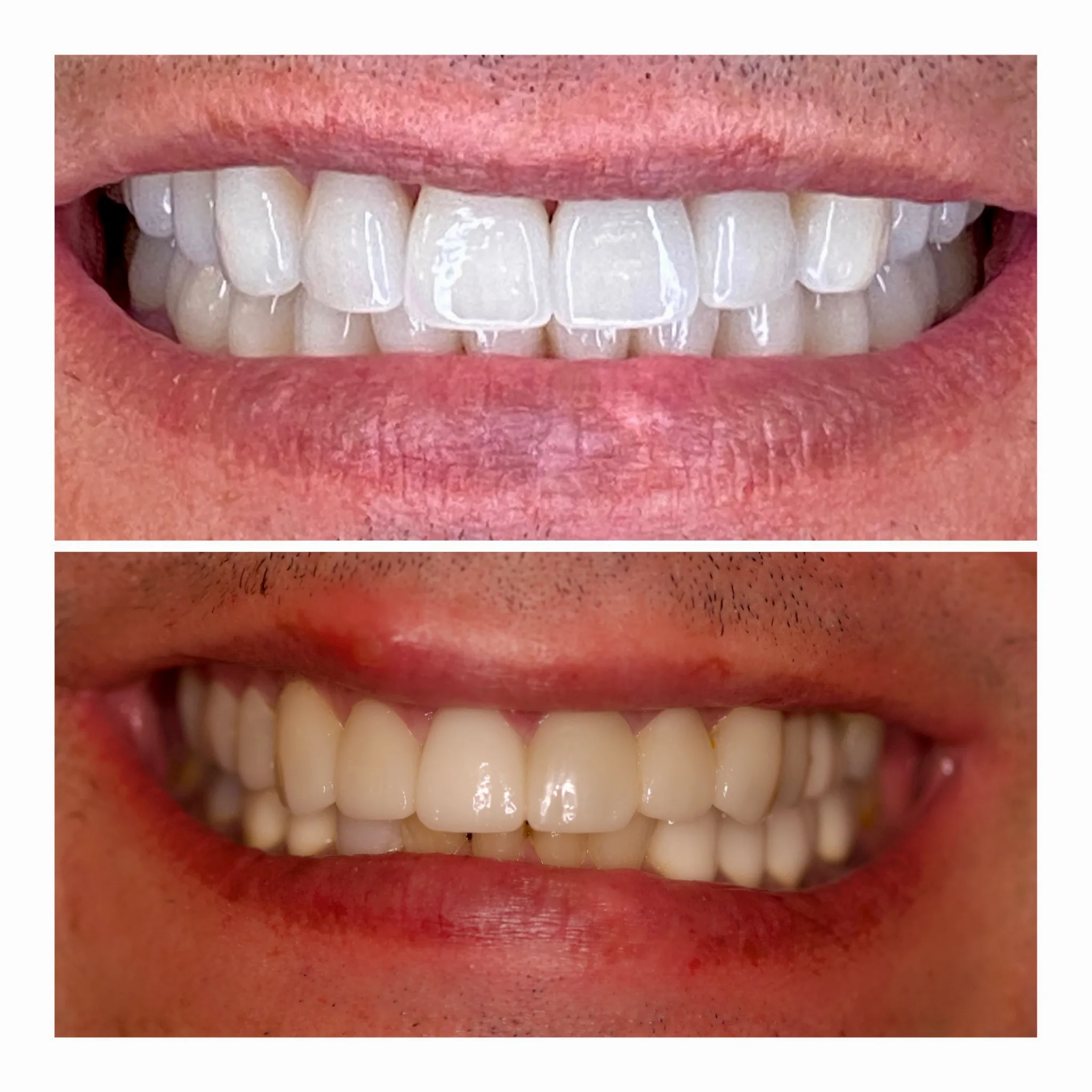
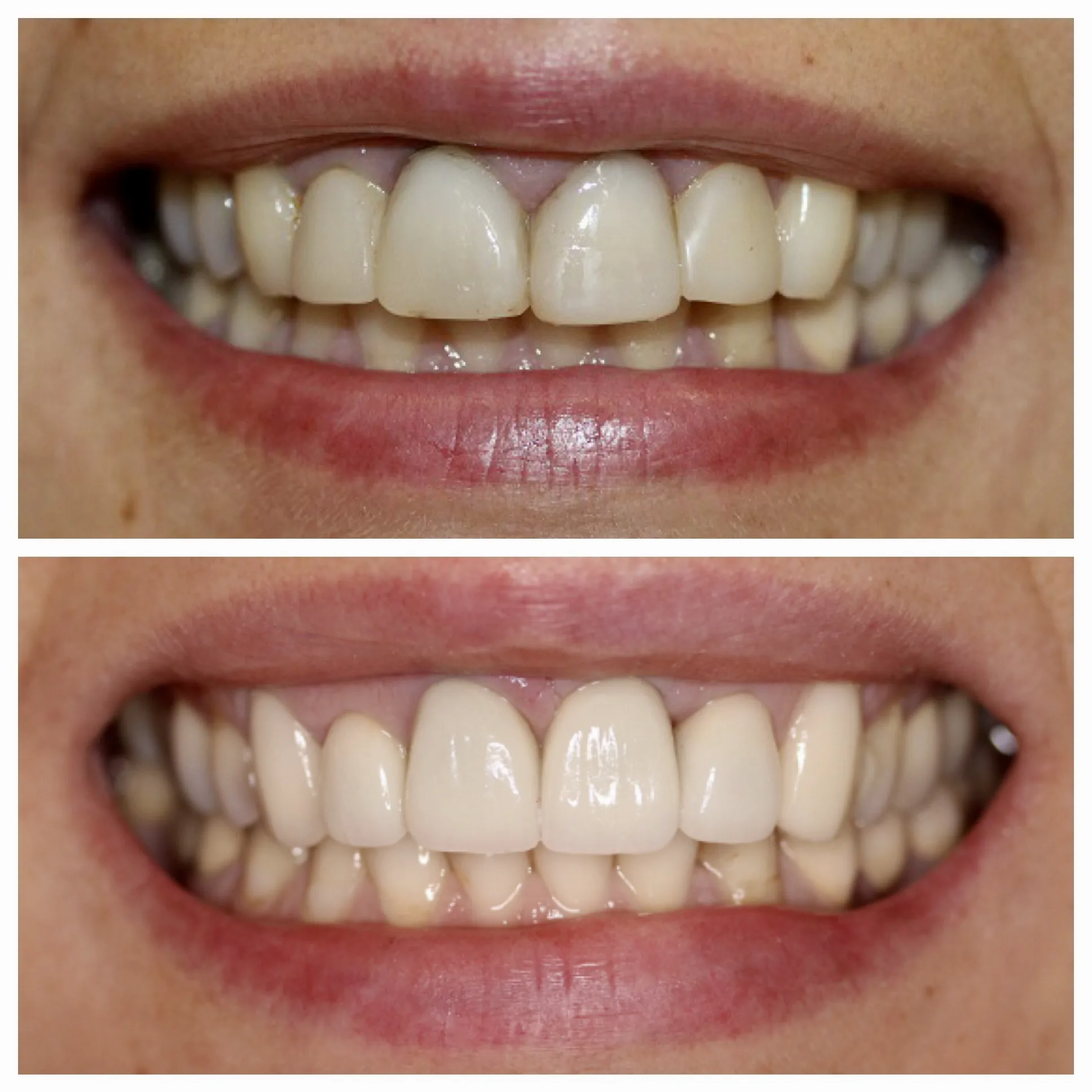
Dr. Pia designs custom porcelain implant crowns, implant-supported bridges, and full-arch implant prosthetics. Every restoration is handmade porcelain, shade matched and hand layered to blend with the adjacent natural dentition.
Custom porcelain implant crowns
A single implant crown replaces one missing tooth. Dr. Pia controls shade, translucency, surface texture, and emergence profile so the crown reads as a natural tooth rather than an opaque replacement. The same porcelain artistry defines her porcelain veneers and her dental crowns.
Implant-supported bridges
An implant-supported bridge replaces three or more adjacent missing teeth using two or more implants as anchors. The bridge spans the gap without preparing the neighboring natural teeth, which a conventional fixed bridge requires.
Full-arch implant restorations
A full-arch restoration replaces an entire upper or lower arch on a set of implants. Dr. Pia designs the prosthetic contours, gum line, and occlusion after the surgical specialist confirms integration.


How does the dental implant process work?
Implant treatment runs in two phases across separate providers. A referred oral surgeon or periodontist places the implant. Dr. Pia then designs and delivers the restoration once the bone has integrated with the fixture.
Phase one: surgical placement by a referred NYC specialist
Dr. Pia does not perform implant surgery. She refers every surgical case to a specific oral surgeon or periodontist she has selected and works with directly.
The surgical sequence follows a defined protocol. The compromised tooth is extracted. A bone graft is placed into the socket. The site is sutured and left to heal for three months before the implant is placed.
Phase two: restorative design by Dr. Pia
After integration, Dr. Pia takes over the restorative phase. She evaluates the occlusion, designs the crown or prosthetic, and directs the handmade porcelain work to her own quality standard.
Patients who are also correcting the appearance of their front teeth often combine implant restoration with no-drill veneers or a full smile makeover sequenced across the same treatment plan.
Who is a candidate for dental implants?
Candidates have one or more missing teeth, sufficient jawbone volume, and healthy gum tissue. Patients with inadequate bone qualify after grafting. Dr. Pia assesses candidacy during the consultation and refers the surgical evaluation to her specialist network.
Patients with misaligned or rotated teeth are assessed for Invisalign first, because occlusion determines how force distributes across a finished restoration.
Common presentations that lead to implant treatment include the following.
- One or more missing teeth in the upper or lower arch
- Failing crowns, bridges, or previously root-canaled teeth
- Bone loss at an extraction site that requires grafting
- Removable dentures that shift during chewing or speech
- Existing implant crowns that no longer match the surrounding teeth
Why does bone grafting matter after a tooth extraction?
Failure to bone graft after an extraction results in approximately 30 percent loss of bone height at that site. Grafting preserves the ridge volume that a future implant requires for stability and a natural gum contour.
Bone grafting is typically covered by dental insurance. Grafting at the time of extraction avoids a second surgical procedure later and protects the soft tissue architecture that frames the final crown.
Gum position around an implant determines whether the restoration looks natural. Cases requiring tissue refinement are addressed through gum design.
What is the difference between screw-retained and cement-retained implant crowns?
A screw-retained crown attaches through an access channel and can be removed by the dentist. A cement-retained crown is bonded to the abutment and offers cleaner contours where the access channel would show.
Screw retention allows retrieval for maintenance or repair without destroying the crown. Cement retention supports better esthetics on anterior teeth, where a visible access channel would interrupt the porcelain surface.
Dr. Pia selects the retention method per case based on implant angulation, the position of the tooth in the arch, and the visibility of the restoration during speech and smiling.
Why are back teeth restored before front teeth?
Posterior teeth are restored before anterior veneers or crowns because the back teeth absorb chewing force. Placing front restorations onto an unsupported bite transfers load onto porcelain that was never designed to carry it.
Dr. Pia states the rule directly:
“We chew with our back teeth. If we don't have back teeth, we chew with our front teeth. Front teeth are for biting, not chewing. Porcelain will break.”
This sequencing rule governs every combined case. Missing posterior teeth are replaced first, then the anterior esthetic work proceeds on a stable foundation.
How long do dental implants last?
Implant durability is case-specific, so this page does not quote a fixed figure. Dr. Pia assesses the variables that drive it at the consultation.
Longevity depends on three variables. Bone volume at placement determines initial stability. Occlusal balance determines how force distributes over time. Daily hygiene and professional monitoring control peri-implant tissue health.
Dr. Pia provides ongoing dental cleanings exclusively for patients who have had restorative work completed at the practice, which allows her to monitor the condition of her own restorations over time.
How much do dental implants cost in NYC?
Implant treatment in Manhattan is quoted in two separate fees. The surgical specialist sets the placement fee. Dr. Pia quotes the restorative fee for the crown, bridge, or prosthetic after evaluating the case.
Low advertised implant offers cover the surgical post only. Those offers exclude the abutment, the crown, and any grafting the site requires.
CareCredit and Alphaeon financing are accepted. The practice accepts credit cards, wire transfers, checks, and cash. Cryptocurrency is not accepted.
Fixture, Abutment, Crown
A complete single-tooth implant in New York City covers the fixture, the abutment, and the crown. Confirmed at your consultation.
Per case
Full-arch restoration is priced per case after the surgical specialist confirms the treatment plan.
Why do patients choose Dr. Pia for implant restorations?
Dr. Pia operates a single-location, single-provider practice, so the dentist who designs the restoration is the dentist who delivers it. No associate covers her cases and no work is delegated to a second location.
Documented outcomes appear in the before and after gallery, published only with written patient consent and cropped to the mouth.
Her restorative credentials and practice model separate this page from surgical implant centers.
- More than 30 years in cosmetic dentistry, with a DDS from NYU College of Dentistry earned in 1988
- Clinical Assistant Professor Emerita at NYU College of Dentistry
- Handmade porcelain restorations rather than 3D printed prosthetics
- One patient in the office at a time, with a 15-minute buffer between every appointment
- Non-disclosure agreements signed by all staff, protecting patient privacy
“Dr. Pia is the absolute best at what she does. I have never experienced a dentist as diligent and knowledgeable. She is a real life Tooth Fairy who has given me the ability to smile with a confidence that does not go unnoticed. Everywhere I go my teeth are an absolute showstopper!”
How do you schedule a dental implant consultation in NYC?
The consultation fee is confirmed when you book and is credited in full toward treatment if you proceed. The appointment runs one hour to one hour and 15 minutes and requires at least 72 hours advance notice; your card is charged at the time of booking.
Patients are asked to email any existing X-rays before the appointment so Dr. Pia can review them in advance. Online booking is not available, because appointment lengths vary by case.
The office is located at 381 Park Ave S #908, New York, NY 10016, and is open Monday through Thursday from 10:00 AM to 5:00 PM. Special scheduling is available for international patients to accommodate travel. Call 212-829-1515 or text 212-829-1515. What to expect when you arrive at the suite is described on our facility page.
Patients traveling from outside the region should review the scheduling guidance for out-of-town patients before booking.
Frequently asked questions about dental implants
No. Dr. Pia does not place implants. She refers every surgical case to a specific oral surgeon or periodontist she works with directly in Manhattan. She designs and delivers the restorative phase, including the porcelain crown, bridge, or full-arch prosthetic. This division keeps surgical placement with a specialist and restorative artistry with a cosmetic dentist of more than 30 years.
The protocol allows three months of healing between grafting and implant placement. Osseointegration follows placement before the final restoration is delivered. The exact interval depends on bone quality at the site, whether grafting was required, and confirmation from the surgical specialist that the fixture has integrated. Dr. Pia begins the restorative phase only after that confirmation.
Yes. Dr. Pia matches shade, translucency, surface texture, and emergence profile to the adjacent natural teeth. The crown is handmade porcelain, hand layered rather than 3D printed, which allows depth of color that printed materials cannot reproduce. Gum contour is designed alongside the crown so the restoration emerges from the tissue the way a natural tooth does.
Yes. Two or more implants can anchor a fixed bridge spanning three or more missing teeth, without preparing the neighboring natural teeth. A full arch can be restored on a set of implants with a fixed prosthetic. Dr. Pia designs the contours, gum line, and occlusion for multi-unit and full-arch cases after the surgical specialist confirms integration.
Coverage varies by plan. Bone grafting performed after an extraction is typically covered by insurance. The practice operates on a fee-for-service basis and accepts CareCredit and Alphaeon financing. Payment is accepted by credit card, wire transfer, check, and cash. Cryptocurrency is not accepted. Fee specifics for your case are quoted at the consultation.
No. Online booking is not offered, because consultation lengths vary from one hour to one hour and 15 minutes depending on the case. Appointments are booked by phone at 212-829-1515 or by text at 212-829-1515, at least 72 hours in advance. The consultation fee is confirmed when you book and is credited in full toward treatment if you proceed; your card is charged at the time of booking.
No, and that is one of the main reasons to choose one. An implant replaces a missing tooth without altering the healthy teeth beside it. An implant-supported bridge behaves the same way: it spans the gap using implants as anchors, so the neighbouring natural teeth are never prepared, which a conventional fixed bridge does require.
Yes. A full-arch restoration replaces an entire upper or lower arch on a set of implants. Dr. Pia designs the prosthetic contours, the gum line and the occlusion after the surgical placement is complete, which is the part that decides whether a full arch reads as teeth rather than as a plate.
Patient Reviews
Brooke Shields
Achilles Zarbis
Patti Schmidt
Eric Price
Agnes Lermani
Danielle T
Aymun Salman
Emily Van Raay
Alina Senkiv
Nathalie Lyon
Electra Zarbis
Theodora Z
Paul Marron
Nicole
Bryanna John
Schedule Your Consultation
Begin your transformation with Dr. Pia. Same-day and out-of-town visits available.