
Composite vs. Porcelain Veneers: Which Should You Choose?
By Dr. Pia Lieb
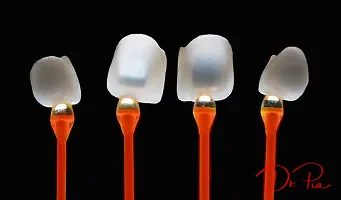
Composite and porcelain veneers both cover the front of your teeth to improve color, shape, and alignment, but they differ in cost, durability, and how natural they look. Composite is faster and more affordable; porcelain is more durable and more lifelike. The best choice depends on your budget, timeline, and how long you want the result to last.
What are composite veneers?
Composite veneers are made from tooth-colored resin sculpted directly onto your teeth in a single visit. They are more affordable, faster, and typically require minimal enamel removal, which keeps them conservative and often reversible.
Strengths
- Lower cost than porcelain
- Same-day completion in most cases
- Often reversible, because little or no enamel is sacrificed
- Easy to polish, repair, or refresh chairside
Weaknesses
- More prone to staining over time from coffee, tea, and wine
- Less chip-resistant than porcelain
- Does not capture and reflect light quite as naturally
- Needs refreshing sooner than porcelain, because resin stains and wears faster
What are porcelain veneers?
Porcelain veneers are thin, custom shells crafted in a dental lab and bonded to the teeth, usually over two visits. They are the premium option, mimicking the translucency of natural enamel and resisting stains far better than resin.
Strengths
- Mimic the translucency of natural enamel beautifully
- Resist stains far better than composite
- Highly durable, outlasting composite when the bite and daily care support it
- Deliver the most polished, natural-looking result
Weaknesses
- Higher cost
- Require more appointments and a lab turnaround
- Traditional placement removes a thin layer of enamel, which cannot be undone
Learn more in our porcelain veneers overview, or read about the conservative alternative on our no-drill veneers page, the minimal-prep approach at the heart of The Dr. Pia Method™.
Composite vs. porcelain: how do they compare side by side?
At a glance, porcelain leads on longevity and looks while composite leads on cost and speed. The table below lays out the trade-offs that matter most when you decide.
Swipe to see more →
| Factor | Composite | Porcelain |
|---|---|---|
| Visits | 1 | 2+ |
| Lifespan | Shorter, resin wears faster | Longer, set by bite and hygiene |
| Stain resistance | Moderate | Excellent |
| Enamel removal | Minimal | Thin layer |
| Reversibility | Often reversible | Not reversible |
| Natural translucency | Good | Outstanding |
How do you choose between composite and porcelain veneers?
Choose based on what you value most: budget and speed point to composite, while longevity and the most natural result point to porcelain. Neither is universally "better"; they simply serve different priorities.
Composite tends to win when you value:
- Budget and speed
- Conservatism, especially for younger patients
- Smaller corrections
- A way to "test" the look before committing to porcelain
Porcelain tends to win when you value:
- Longevity and stain resistance
- The most natural, polished result
- A long-term smile transformation
There is also a middle path: start with composite and upgrade to porcelain later once you are sure of the look you want.
What do composite and porcelain veneers have in common?
Both share the same core rules for care: they don't change color once placed, they need excellent hygiene, and grinding can damage either one. Treating them well is what makes either type last.
- Neither changes color once placed, whiten your teeth before getting veneers if needed, so your natural shade matches
- Both require excellent hygiene and gentle habits to protect the margins
- Both can chip if you grind your teeth, a night guard protects your investment
Do veneers damage the teeth underneath?
Composite and minimal-prep porcelain veneers preserve most of the natural tooth, while traditional porcelain removes a thin enamel layer that does not grow back. That is why the technique matters as much as the material. For a fuller answer, see do veneers ruin your teeth?: modern no-prep and minimal-prep methods keep the underlying tooth healthy.
Frequently asked questions
Are porcelain veneers worth the extra cost?
For most patients seeking a long-term transformation, yes. They look more natural, resist staining, and last roughly twice as long as composite.
Can I switch from composite to porcelain later?
Often yes. Composite can be removed and replaced with porcelain veneers when you are ready to upgrade.
Do veneers ruin your teeth?
Traditional veneers alter the tooth surface irreversibly, but modern no-prep and minimal-prep techniques preserve more enamel. Ask your cosmetic dentist which is right for your case.
Which lasts longer?
Porcelain, usually by two to three times, thanks to its durability and stain resistance.
The bottom line
The right answer comes down to your budget, timeline, and how much you value longevity. Composite delivers fast, conservative, affordable improvements. Porcelain delivers the most natural and durable result available in cosmetic dentistry.
This article is for educational purposes only and is not a substitute for professional dental advice.
Not sure which is right for your smile? and we'll show you a digital preview of both options.