
Do Veneers Ruin Your Teeth? Honest Answers Before You Commit
By Dr. Pia Lieb
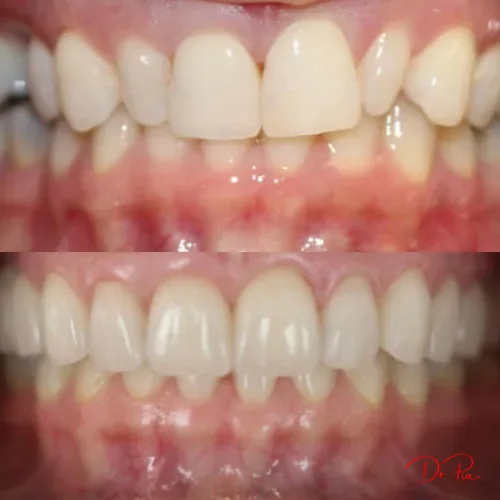
Veneers do not ruin your teeth, but traditional veneers alter them irreversibly. A veneer is a thin porcelain shell bonded to the front of a tooth, and it sits behind many of the dazzling smiles you see online. The honest answer people really want is whether the process damages the natural tooth underneath, so here is what veneers actually involve before you commit.
What is a veneer?
A veneer is a thin shell, usually porcelain, bonded to the front of a tooth to change its color, shape, or alignment. It covers only the visible surface rather than wrapping the whole tooth like a crown.
For traditional veneers, the dentist removes a small layer of enamel so the shell sits flush and looks natural rather than bulky. That preparation is what makes the result seamless.
Are traditional veneers irreversible?
Yes, traditional veneers are irreversible because enamel does not grow back. Once that thin layer is removed, the tooth will always need to be covered.
This is not the same as "ruining" your teeth. It is a commitment that cannot be undone, made with a clear cosmetic purpose. The distinction matters: your teeth are not harmed, but the decision cannot be undone.
Are there veneers that don't damage teeth?
Yes, minimal-prep and no-prep veneers preserve most or all of your natural enamel. Not every veneer requires the same amount of preparation.
- Minimal-prep veneers remove very little enamel
- No-prep veneers preserve all the enamel, though they do not suit every case
Explore our no-drill veneers approach, the cornerstone of the Dr. Pia Method™. This tooth-preserving philosophy aims to keep your natural structure intact wherever the clinical situation allows.
What can veneers fix in a single treatment?
Veneers correct color, chips, gaps, minor misalignment, and worn or short teeth all at once. This versatility is why one treatment can transform an entire smile zone.
- Stubborn stains that will not respond to whitening
- Chips and minor fractures
- Gaps between teeth
- Minor misalignment
- Worn or short teeth
- Shape and proportion problems
This is why veneers are often the centerpiece of a full smile makeover: a single set can resolve several complaints that would otherwise need whitening and reshaping done separately. The dentist designs each shell to work with your face rather than against it.
How long do veneers last?
Veneer lifespan varies by case rather than by a set number of years. It follows the same diligent care you give natural teeth, plus your bite and whether you grind.
- Brush and floss daily and keep up regular checkups
- Porcelain resists staining better than natural enamel
- A night guard protects veneers from grinding damage
Treat them like natural teeth and they reward you with years of stable, stain-resistant results.
What are the trade-offs of veneers?
Veneers deliver a dramatic, long-lasting transformation, but at real cost, and traditional versions are not reversible. Weighing both sides keeps expectations honest.
Swipe to see more →
| Pro | Con |
|---|---|
| Dramatic transformation | A significant investment, quoted case by case |
| Stain-resistant (porcelain) | Traditional veneers are not reversible |
| Long-lasting | Can chip if abused |
| Custom-shaped to flatter your face | Temporary sensitivity sometimes |
When are veneers the wrong choice?
Veneers are the wrong choice with untreated grinding, active gum disease, insufficient enamel, or crookedness that orthodontics could fix. Ruling these out first protects both your teeth and your investment.
- Significant grinding without a commitment to wearing a night guard
- Active gum disease, which must be treated first
- Insufficient enamel for the shell to bond to
- Misalignment that orthodontics could correct more conservatively: see veneers vs. orthodontics
Frequently Asked Questions
Do veneers ruin your teeth?
No, but traditional veneers alter them irreversibly. Going in fully informed is the key to being happy with the result.
Are veneers reversible?
Traditional veneers are not. No-drill and minimal-prep options preserve more of the natural tooth structure.
How many veneers do I need?
Usually 6 to 10 across the smile zone for a full transformation. A single veneer is common for repairing one chipped front tooth.
How long do they last?
There is no set number of years. Daily care, your bite, and grinding decide how long a set holds.
The Bottom Line
Do veneers ruin your teeth? No, but they alter them irreversibly. Go in understanding it is a lifelong commitment rather than a try-it-and-see, and veneers can be one of the most satisfying cosmetic upgrades available.
This article is for educational purposes only and is not a substitute for professional dental advice.