
Same-Day Crowns: How 3D Printing Is Changing Dental Visits
By Dr. Pia Lieb
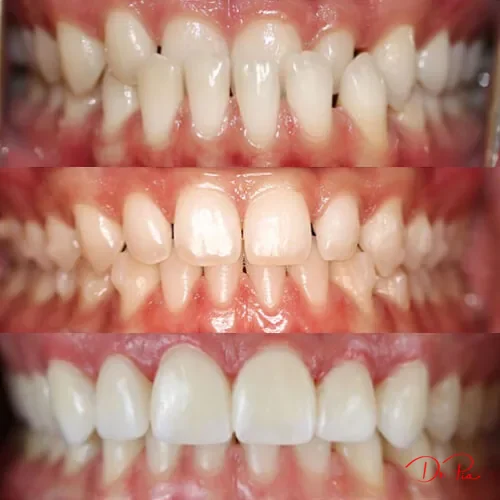
Same-day crowns let you walk in with a damaged tooth and leave with the final crown in a single visit: no temporary, no weeks of waiting. Digital scanning, on-screen design, and in-office milling or 3D printing have compressed the old two-appointment process into one. (If you're not sure whether you even need a crown, our guide on when you need a dental crown breaks it down.)
How do same-day crowns work?
Same-day crowns are scanned, designed, manufactured, and bonded all in one appointment using in-office digital technology. There's no physical impression sent to an outside lab, which is what used to add the two-week wait.
The process runs in four steps:
- Digital scan: your dentist scans the tooth with a small wand, replacing goopy impression trays
- Software design: the crown is designed precisely on screen to match your bite
- In-office milling or 3D printing: the crown is produced right there while you wait
- Seating: the finished crown is cemented in the same visit
By the end of one appointment, the final crown is bonded in place and ready to use.
How is 3D printing changing dentistry overall?
3D printing is reshaping dentistry by producing crowns, inlays and onlays, dentures, surgical guides, and aligners faster, more precisely, and often in-house. It moves fabrication from distant labs to the dental office itself.
3D printing now supports:
- Crowns and bridges
- Dentures and partial dentures
- Surgical guides for precise implant placement
- Clear aligners like Invisalign
The advantages compound: faster turnaround, greater customization and precision, often lower cost than older methods, and quality control in-house without waiting on outside labs. Fewer handoffs mean fewer chances for error and delay.
Is a same-day crown as good as a traditional lab crown?
For most cases, yes, modern same-day ceramics are strong, durable, and aesthetically excellent, matching lab crowns in everyday use. The chairside material and the lab material are both high-quality ceramics.
Same-day ceramics are:
- Strong enough for normal chewing forces
- Durable over many years
- Aesthetically excellent, blending with surrounding teeth
For very complex cases or specific premium materials, a dental lab may still be preferred, for example, when layering multiple porcelains for a highly translucent front tooth. Ask your dentist which route suits your situation.
How do same-day and traditional crowns compare?
The core difference is convenience: same-day means one visit and no temporary, while traditional lab crowns offer a wider material range across two visits, with comparable quality and cost.
Swipe to see more →
| Factor | Same-Day | Traditional Lab Crown |
|---|---|---|
| Visits | 1 | 2 |
| Temporary crown needed | No | Yes |
| Time in chair | 1.5 to 2 hrs | 2 visits, 1 hr each |
| Material options | Most common ceramics | Wider material range |
| Quality | Excellent | Excellent |
| Cost | Comparable to lab | Comparable |
Explore our dental crowns service to see how the process works in practice.
What are the patient benefits of same-day crowns?
The biggest wins are one visit instead of two, no fragile temporary crown to manage, and often same-day relief for a damaged tooth. The experience is simply easier.
- One visit instead of two
- No temporary crown to baby: nothing to fall off, no weeks avoiding sticky foods
- Often same-day pain relief for a cracked or damaged tooth
- Less time off work
- A more precise digital fit from the start
Frequently Asked Questions
Are same-day crowns covered by insurance?
Usually yes, they're typically covered the same as traditional crowns.
How long do same-day crowns last?
Service life varies by case rather than by a set number of years, and is comparable to a lab crown of the same material.
Can any crown be done same-day?
Most can. Very large bridges or specific aesthetic cases may still need a lab.
Does same-day mean lower quality?
No. Modern ceramics designed and milled chairside meet or exceed traditional lab quality for most cases.
The Bottom Line
The two-week crown wait is quietly becoming a thing of the past. Same-day crowns mean one visit, no temporary, and modern ceramics that perform as well as lab work for most cases, convenience without a quality trade-off. For anyone who dreads multiple appointments or a slipping temporary, it's one of the most patient-friendly advances in modern dentistry.
This article is for educational purposes only and is not a substitute for professional dental advice.