
Dental Crowns: When You Need One and What to Expect
By Dr. Pia Lieb
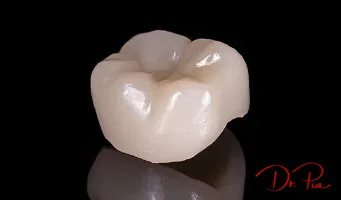
A dental crown is a custom cap that fits over a damaged tooth to restore its shape, strength, and appearance. It is one of dentistry's workhorses, used when a tooth is too damaged for a filling but still worth saving. Knowing when you actually need one helps the recommendation make sense when your dentist gives it.
When do you actually need a crown?
You need a crown when a tooth is too damaged for a simple filling but still healthy enough to save. A filling replaces missing tooth material, while a crown wraps and reinforces the whole tooth.
Dentists typically recommend a crown in these situations:
- A large cavity that a filling cannot reliably hold
- A cracked or weakened tooth at risk of splitting
- A tooth that has had a root canal, which leaves it brittle
- A worn-down tooth from grinding or age
- The visible top of a dental implant
- A badly discolored or misshapen tooth that needs cosmetic coverage
What are dental crowns made of?
Crowns are made from all-ceramic porcelain, porcelain-fused-to-metal, zirconia, or gold, and each suits a different tooth. The choice balances how natural it looks against how much force it must withstand.
Swipe to see more →
| Material | Best For | Notes |
|---|---|---|
| All-ceramic / porcelain | Front teeth | Most natural-looking |
| Porcelain-fused-to-metal (PFM) | Anywhere | Balance of strength and looks |
| Zirconia | Anywhere | Extremely durable |
| Gold | Back molars | Long-lasting, but visible |
Front teeth usually get all-ceramic or porcelain for a seamless match. Back molars, which take the heaviest chewing load, often get zirconia or gold for durability.
What does getting a crown involve?
The traditional crown takes two visits: one to prepare the tooth and one to bond the finished crown. A temporary crown protects the tooth in between.
- Visit 1: The dentist prepares and shapes the tooth, takes an impression, and fits a temporary crown
- Wait: The lab fabricates the final crown, usually over 1 to 2 weeks
- Visit 2: The dentist removes the temporary and bonds the final crown
Can you get a crown in one day?
Yes, many offices now offer same-day crowns using digital scanning and in-office milling. The technology collapses the two-visit process into a single appointment with no temporary crown needed.
A digital scanner captures the tooth, software designs the crown, and a milling or printing unit produces it on site. Learn how same-day crowns and 3D printing work, or explore our dental crowns service for both traditional and same-day options.
How do you care for a dental crown?
Care for a crown the same way you care for a natural tooth: brush, floss, and protect it from grinding. A crown itself cannot decay, but the tooth and gumline underneath still can.
- Brush and floss as usual, paying attention to the gumline
- Remember that the gumline around a crown can still develop decay
- Avoid chewing ice or other very hard objects
- Wear a night guard if you grind your teeth
- Keep up regular check-ups so the crown margins stay healthy
How long do dental crowns last?
Crown lifespan varies by case rather than by a set number of years. The material selected, your bite, and your oral hygiene shape how the restoration performs.
Grinding, chewing hard objects, and neglected gumlines shorten a crown's life. A night guard and consistent home care extend it well past the average.
Crown, inlay, or filling, which do you need?
A filling repairs small cavities, an inlay or onlay handles medium damage, and a crown restores a tooth with large damage or a crack. Matching the restoration to the damage preserves the most natural tooth structure.
Swipe to see more →
| Damage Level | Best Restoration |
|---|---|
| Small cavity | Filling |
| Medium damage | Inlay or onlay |
| Large damage or crack | Crown |
| Damaged with cosmetic concerns | Porcelain crown |
Frequently Asked Questions
Are crowns covered by insurance?
Often partially, usually classified as a major restoration with around 50% coverage. Confirm the details with your plan.
How long is the recovery from a crown?
Expect mild sensitivity for a few days and full normal use within a couple of weeks.
Can a crown come off?
It is uncommon. If yours becomes loose, see a dentist promptly so it can be re-cemented.
Are crowns noticeable?
A well-made porcelain or zirconia crown is essentially invisible against your natural teeth.
The Bottom Line
If your dentist recommends a crown, it is usually about protecting a tooth that is worth keeping, and saving you from a bigger, costlier problem down the road.
This article is for educational purposes only and is not a substitute for professional dental advice.