
One Tooth Darker Than the Rest? Here's Why and How to Fix It
By Dr. Pia Lieb
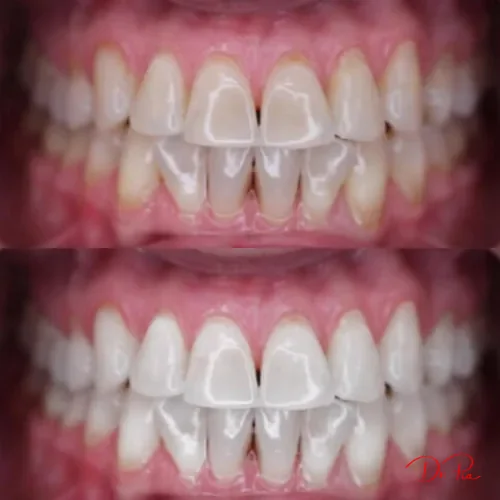
It's a frustrating situation: your smile looks fine except for one tooth that's noticeably darker: gray, yellow, or brown, standing out against its neighbors. A single discolored tooth has specific causes and specific fixes, different from whitening a whole smile.
Why does one tooth go dark?
A lone dark tooth is usually discolored from the inside, not the surface, the key difference from whole-smile staining.
1. A "Dead" or Non-Vital Tooth
The most common reason. The tooth has lost its vitality, often following:
- Trauma (a knock that damaged the inner pulp)
- An old root canal
- Deep decay
As the inner tissue breaks down, the tooth gradually darkens from within.
2. Old Restorations Showing Through
Large old fillings or metal posts can darken a tooth from beneath.
3. Staining From Dental Materials
Certain older dental materials can leach pigment into the tooth over time.
Why won't regular whitening fix a single dark tooth?
Because the discoloration is internal, the kind of teeth whitening that actually works on surface stains won't fix it. You'll need a different approach.
Option 1: Internal Bleaching ("Walking Bleach")
For a non-vital tooth that's had a root canal, internal bleaching is often the go-to. The dentist places a whitening agent inside the tooth itself, lightening it from the inside out over one or more visits.
Best for: Root-canaled teeth that have darkened. Conservative and often dramatic.
Best for: Mild discoloration, budget-conscious patients.
Option 2: A Porcelain Veneer
A porcelain veneer covers the front of the tooth with a custom shell that matches your other teeth, a more durable, seamless result.
Best for: Moderate to severe discoloration where the tooth itself is structurally sound.
Option 3: A Dental Crown
A crown encases the tooth fully, the choice when the tooth is also structurally weak (common after a root canal).
Best for: Discolored teeth that are also brittle, cracked, or extensively restored.
Which Option Fits Your Tooth?
Swipe to see more →
| Cause | Recommended Fix |
|---|---|
| Root canal-treated tooth | Internal bleaching |
| Mild internal staining, healthy tooth | Veneer |
| Moderate discoloration | Porcelain veneer |
| Weak, brittle, or cracked tooth | Crown |
The right approach depends on why the tooth is dark and whether it's still healthy underneath, which is why an exam (and often an X-ray) comes first.
When should you act quickly?
A tooth that's darkening after trauma should be checked promptly, since the discoloration can signal an underlying problem that needs treating beyond cosmetics.
Frequently Asked Questions
Can a dead tooth turn white again? With internal bleaching, often yes, to a remarkable degree.
Is internal bleaching safe? Yes, when done by a dentist on a properly root-canaled tooth.
Will a single veneer match my other teeth? A skilled cosmetic dentist can shade-match a single restoration to your surrounding teeth, often invisibly.
What if my one dark tooth is also loose or painful? See a dentist right away. That combination can signal infection or a failing restoration.
The Bottom Line
A single dark tooth is a well-understood, very fixable problem. Whether through internal bleaching, a veneer, or a crown, a cosmetic dentist can blend that one stubborn tooth back into a uniform, natural-looking smile.
with Dr. Pia to identify the cause and the best fix for your tooth.