
Dental Bridges vs. Implants for a Missing Tooth
By Dr. Pia Lieb
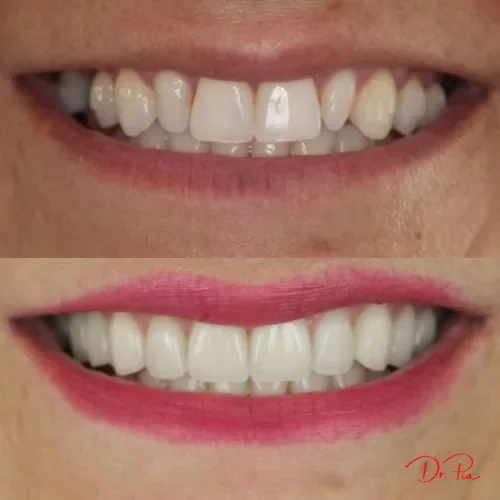
A dental bridge and a dental implant both replace a missing tooth, but they solve the problem in very different ways. A bridge fills the gap without surgery by anchoring to neighboring teeth. An implant replaces the tooth and its root with a titanium post. Which is right depends on your neighboring teeth, your bone health, and your budget.
What is a dental bridge?
A dental bridge is a false tooth held in place by crowns cemented onto the healthy teeth on either side of a gap. It literally bridges the empty space left by a missing tooth and works as one fixed unit.
A traditional bridge has two parts:
- A false tooth (or teeth), called a pontic, that fills the gap
- Porcelain crowns on the healthy teeth on either side that anchor the pontic
The neighboring teeth are filed down to receive the crowns, and the whole unit is cemented in place, not designed to come out.
When does a dental bridge make sense?
A bridge makes sense when you want to avoid surgery, need a faster result, or the neighboring teeth already need crowns. It is a proven, well-established solution in the right situation.
- You want to avoid the implant surgery and healing window
- The neighboring teeth already need crowns anyway, which makes them ideal bridge anchors
- You want a faster solution, weeks rather than months
- Upfront budget is a primary concern
What are the trade-offs of a dental bridge?
The main trade-off is that a bridge reshapes healthy neighboring teeth and does nothing to preserve the bone under the gap. These downsides shape the long-term picture.
- Irreversible reshaping of neighboring teeth, even if they were perfectly healthy
- No bone preservation under the gap, so the jawbone slowly shrinks over time
- A finite service life, so replacement is expected rather than optional
- Cleaning under the pontic requires threading floss or a water flosser
That last point matters: because you cannot floss between a bridge normally, plaque can build where the pontic meets the gum unless you use the right technique daily.
When is an implant better than a bridge?
An implant is better when the neighboring teeth are healthy, when bone preservation matters, or when you want the longest-lasting result. It replaces the root, which no bridge can do.
- There are no failing teeth to sacrifice as anchors
- You want the longest-lasting replacement
- Bone preservation matters to you, because the post stimulates the jaw like a natural root
- You can tolerate the surgical process and healing window, our guide to how dental implants work walks through the full timeline and cost
How do bridges and implants compare?
A bridge is faster and cheaper upfront, while an implant lasts longer and protects the bone. The table below lays the two options side by side.
Swipe to see more →
| Factor | Bridge | Implant |
|---|---|---|
| Surgery required | No | Yes |
| Affects neighboring teeth | Yes, reshapes them | No |
| Bone preservation | No | Yes |
| Service life | Shorter, replacement expected | Longer, varies by case |
| Time to complete | A few weeks | 3 to 6 months |
| Long-term cost per year | Often higher | Often lower |
Which should you choose for a missing tooth?
Choose a bridge when the adjacent teeth already need crowns or surgery is off the table, and an implant when those teeth are healthy and longevity matters. Your situation usually points clearly one way.
Swipe to see more →
| Your Situation | Best Choice |
|---|---|
| Adjacent teeth already need crowns | Bridge |
| Adjacent teeth are perfect | Implant |
| Want the fastest solution | Bridge |
| Want the longest-lasting solution | Implant |
| Bone health is a concern | Implant |
| Cannot undergo surgery | Bridge |
Why replace a missing tooth promptly?
Replacing a missing tooth promptly stops the surrounding teeth from drifting, the bite from shifting, and the bone from shrinking. An open gap sets off a chain of changes in the mouth.
Neighboring teeth tilt into the space, the opposing tooth can over-erupt, and the unused bone resorbs. The longer you wait, the more complex and costly the eventual solution becomes.
Frequently Asked Questions
Are bridges covered by insurance?
Often partially, typically around 50% under major restorative benefits. Confirm the specifics with your plan.
Do bridges feel like real teeth?
The crowns on the supporting teeth feel like crowns. The false tooth has no nerve sensation but functions normally for chewing.
Can a bridge be replaced with an implant later?
Yes, though you would need to address any bone loss that occurred under the bridge first.
How long does it take to get used to a bridge?
Usually a few days to a couple of weeks as your bite and tongue adjust.
The Bottom Line
The best answer depends on your specific mouth, bone health, and budget, and a consultation is the real deciding step. Either way, replacing a missing tooth promptly matters for the health of everything around it.
This article is for educational purposes only and is not a substitute for professional dental advice.