
Is Cosmetic Dentistry Reversible? What Can Be Undone
By Dr. Pia Lieb
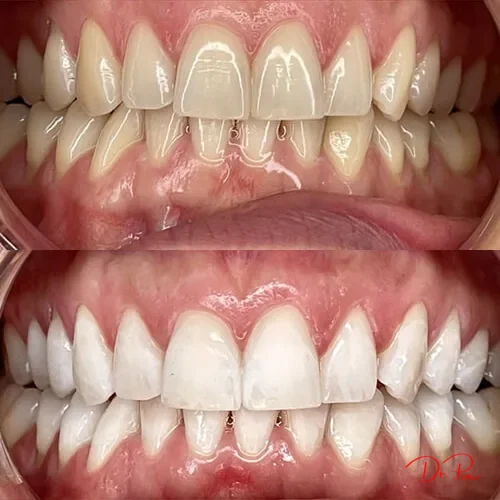
One of the most important questions to ask before any cosmetic dental work, and one people often skip in their excitement, is simple: can this be undone?
The honest answer varies a lot by treatment, and knowing where each one falls helps you commit with confidence rather than regret.
The Reversibility Spectrum
Let's sort common procedures from most reversible to least reversible.
Fully Reversible
- Teeth whitening: temporary by nature, fades over time, changes nothing about the tooth's structure
- Removable veneers: simply pop out
Technically Not Reversible but Low-Stakes
- Tooth reshaping: removes a tiny bit of enamel; technically not reversible, but the change is so minor it's low-stakes
Often Reversible
- Orthodontics (braces/aligners): moves teeth without altering them, though a retainer is needed to maintain results
Not Reversible
- Traditional porcelain veneers: require removing a layer of enamel; the tooth will always need to be covered afterward
- Dental crowns: involve significant reshaping of the tooth
- Dental implants: placed in bone and not designed to be removed
Why doesn't "not reversible" mean "no maintenance ever"?
Even irreversible cosmetic work eventually needs replacement:
- Veneers are replaced when the margin, the shade, or the bond no longer holds up
- Crown service life varies by case rather than by a set number of years
- Implants replace the root, though the crown on top may still need replacement
The underlying tooth, however, is committed to being covered for life, which is the real reason behind the question of whether veneers ruin your teeth.
Principles for Smart Cosmetic Decisions
1. Try the Reversible Option First
When two treatments could solve your problem, the more conservative, reversible one is usually worth considering first. Many people are well served by whitening rather than jumping straight to veneers.
2. Use Previewing for Irreversible Work
This is exactly where digital smile design and trial smiles matter: they let you preview an irreversible result before committing.
3. Ask the Direct Question
Before any cosmetic procedure, ask your dentist:
- How reversible is this?
- What's the long-term commitment?
- Is there a more conservative option that achieves a similar result?
A good dentist will welcome the question and answer it honestly.
Reversibility at a Glance
Swipe to see more →
| Treatment | Reversible? | Long-term commitment |
|---|---|---|
| Whitening | Fully | None, fades naturally |
| Tooth reshaping | Minor and low-stakes | Low |
| Orthodontics | Yes (with retainer) | Retainer wear |
| Removable veneers | Fully | None |
| No-drill veneers | Sometimes | Lower than traditional |
| Traditional veneers | No | Lifelong covering |
| Crowns | No | Lifelong covering |
| Implants | No | Lifelong |
Frequently Asked Questions
Can veneers be removed? Traditional veneers can be removed but the underlying tooth needs to be re-covered because enamel was removed.
Are no-drill veneers reversible? More so than traditional veneers, minimal or no enamel is removed. Talk to your dentist about your specific case.
What's the most conservative cosmetic option? Whitening, then no-drill veneers, in roughly that order.
Should I get an irreversible treatment if I'm under 25? This deserves a careful conversation. Many cosmetic dentists prefer conservative options for younger patients until growth and tooth shape stabilize.
The Bottom Line
Cosmetic dentistry ranges from fully temporary to lifelong commitment. There's nothing wrong with irreversible work when it's the right choice and well done, but you should always know which kind you're signing up for before you sit in the chair.
with Dr. Pia to explore the most conservative path to your goal.